

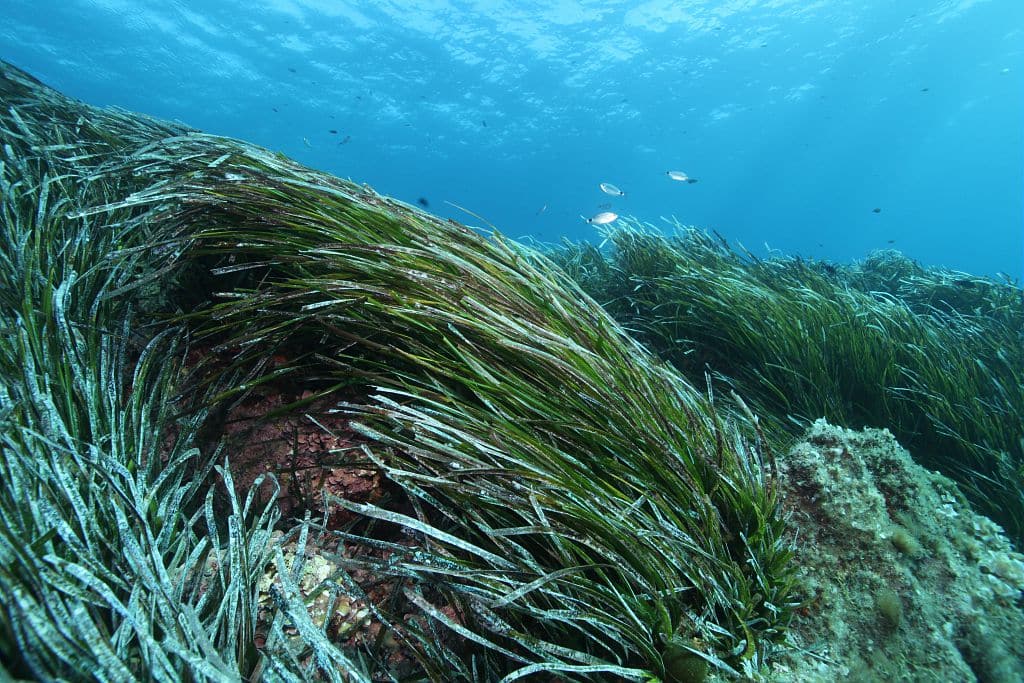
Posidonia is an aquatic flowering plant found in the Mediterranean. A veritable underwater Swiss army knife, it is an incredible ecosystem that protects our coasts.
A protected plant
Posidonia is an aquatic flowering plant that grows in shallow coastal waters (maximum 40 meters).
It is very common on the French coast. It likes clean, unpolluted water.
Destroying posidonia leaves, even dead ones, is prohibited: Posidonia is a protected plant. If you see many dead leaves on the beach, it's a sign of good water quality.
It flowers in autumn and bears fruit in spring. These fruits resemble green olives, leaving a seed that will produce a new plant. In France, these flowerings only occur every 4 to 6 years.

Posidonia and its many benefits
Posidonia takes its name from the sea god Poseidon, certainly because of its formidable role in the underwater ecosystem.
Posidonia form vast, dense meadows that form the basis of one of the Mediterranean's richest ecosystems.
- The Posidonia meadow is a spawning ground, habitat and larder for all kinds of species: crustaceans, sea urchins, starfish, cuttlefish, sponges, worms, molluscs, groupers and even moray eels...
- The Posidonia meadow is also a carbon sponge. It is stored in its roots for millennia: "the carbon stored in the Mediterranean by Posidonia meadows would represent 11% to 42% of the carbon dioxide emissions produced by Mediterranean countries since the start of the industrial revolution".
- By producing oxygen, seagrass beds support numerous marine ecosystems and species. They are twice as productive as tropical forests.
- Posidonia is also responsible for keeping waters clear. The grasses trap particles in suspension.
- Seagrass beds protect beaches from erosion: dead leaves on beaches prevent sand from being washed away by waves.

The boater's role
To protect the posidonia, ZMELs (zones de mouillage et d'équipements légers) have been created, such as the Bagaud ZMEL in Port-Cros. These are fixed anchorages, with screw anchors that avoid damaging the seabed, and the absence of chains in contact with the seagrass preserves the posidonia. Some anchorages have also been banned.
Applications: for posidonia-friendly navigation at sea, we recommend the Donia application. You benefit from precise nautical charts. It enables all yachtsmen to position themselves in relation to the nature of the seabed and to anchor outside the seagrass beds, in compliance with the law.
Discover also the Nav&Co application.

